Viktor Yarotskyy, Ph.D.
Assistant Professor
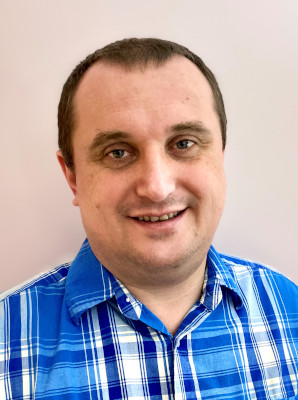
Department: Department of Pharmacology and Toxicology
Email: viktor.yarotskyy@vcuhealth.org
Address/Location:
Molecular Medicine Research Building, Room 4038
1220 E Broad St
Richmond, VA 23298
Education:
Ph.D. Biophysics (2002) Ukraine - Bogomoletz Institute of Physiology
MS Radiophysics (1998) Ukraine - Taras Shevchenko National University, Kyiv
BS Radiophysics (1996) Ukraine - Taras Shevchenko National University, Kyiv
Research interests
- Neuronal ion channel biophysics, physiology, pharmacology, and structure–function relationships
- Cellular and molecular mechanisms of synthetic opioid neurotoxicity
- Cellular and molecular mechanisms of HIV-associated neurocognitive disorders (HAND)
Ion channels and transporters are transmembrane proteins that regulate the flow of ions across biological membranes and are fundamental to nervous system function. By controlling neuronal excitability, synaptic transmission, and intracellular signaling, they govern processes ranging from learning, cognition, and behavior to hormone secretion, muscle contraction, and cell-to-cell communication. With approximately 300 genes encoding ion channels identified to date, these proteins represent one of the most diverse and therapeutically important classes of molecular targets.
Our research seeks to understand how ion channels and transporters regulate neuronal function under physiological conditions and how their dysregulation contributes to neurological disease. A major focus of our current work is defining the mechanisms by which synthetic opioids, particularly fentanyl and its adulterants, and HIV-1 proteins interact to alter neuronal excitability, disrupt intracellular ion homeostasis, and promote neurotoxicity. In collaboration with Drs. Kurt F. Hauser (in Pharmacology and Toxicology) and Pamela E. Knapp (in Anatomy and Neurobiology), we investigate the roles of voltage-gated calcium, potassium, sodium, and chloride channels, as well as ionotropic glutamate and GABA receptors, in mediating neuronal dysfunction following opioid and HIV-1 co-exposure.
Selected publications:
Yarotskyy V, Schmitt RM, Goudsward HJ, Nass SR, Harbour K, McQuiston AR, Knapp PE, and Hauser KF. Acute fentanyl and xylazine co-exposure uniquely increase the excitability of dopamine type 2 receptor-expressing striatal medium spiny neurons. J Neurophysiol 135: 457–474, 2026.
Yarotskyy V, Contois L, Hahn YK, Nass SR, Knapp PE, and Hauser KF. Novel voltage-dependent Cl(-) channels in striatal medium spiny neurons are unrelated to ClC-1 or other known Ca(2+)-induced Cl(-) channel/transporter types. Neurosci Lett 844: 138032, 2025.
Yarotskyy V, Nass SR, Hahn YK, Contois L, McQuiston AR, Knapp PE, and Hauser KF. Sustained fentanyl exposure inhibits neuronal activity in dissociated striatal neuronal-glial cocultures through actions independent of opioid receptors. J Neurophysiol 132: 1056–1073, 2024.
Yarotskyy V, Lark ARS, Nass SR, Hahn YK, Marone MG, McQuiston AR, Knapp PE, and Hauser KF. Chloride channels with ClC-1-like properties differentially regulate the excitability of dopamine receptor D1- and D2-expressing striatal medium spiny neurons. Am J Physiol Cell Physiol 322: C395–C409, 2022.
Yarotskyy V, Malysz J, and Petkov GV. Properties of single-channel and whole cell Cl(-) currents in guinea pig detrusor smooth muscle cells. Am J Physiol Cell Physiol 316: C698–C710, 2019.
Yarotskyy V, and Dirksen RT. Monovalent cationic channel activity in the inner membrane of nuclei from skeletal muscle fibers. Biophys J 107: 2027–2036, 2014.
Lanner JT, Georgiou DK, Dagnino-Acosta A, Ainbinder A, Cheng Q, Joshi AD, Chen Z, Yarotskyy V, Oakes JM, Lee CS, Monroe TO, Santillan A, Dong K, Goodyear L, Ismailov, II, Rodney GG, Dirksen RT, and Hamilton SL.AICAR prevents heat-induced sudden death in RyR1 mutant mice independent of AMPK activation. Nat Med 18: 244–251, 2012.